
By Taylor Murray
Thomas Todhunter “T. T.” Shields (1873–1955) is an individual who looms large in the Canadian Baptist story. As the primary mover of the fundamentalist-modernist schism of 1927 (which divided Baptists in Ontario and Quebec), there is a case to be made that there is no Baptist in Canada from the twentieth century who has had more written about them.
Put simply, he was no stranger to controversy. He was beloved by some and hated by others. For a time, anything Shields touched became a national story. Most generously, one could call him a provocateur, though many others prefer to use stronger language.
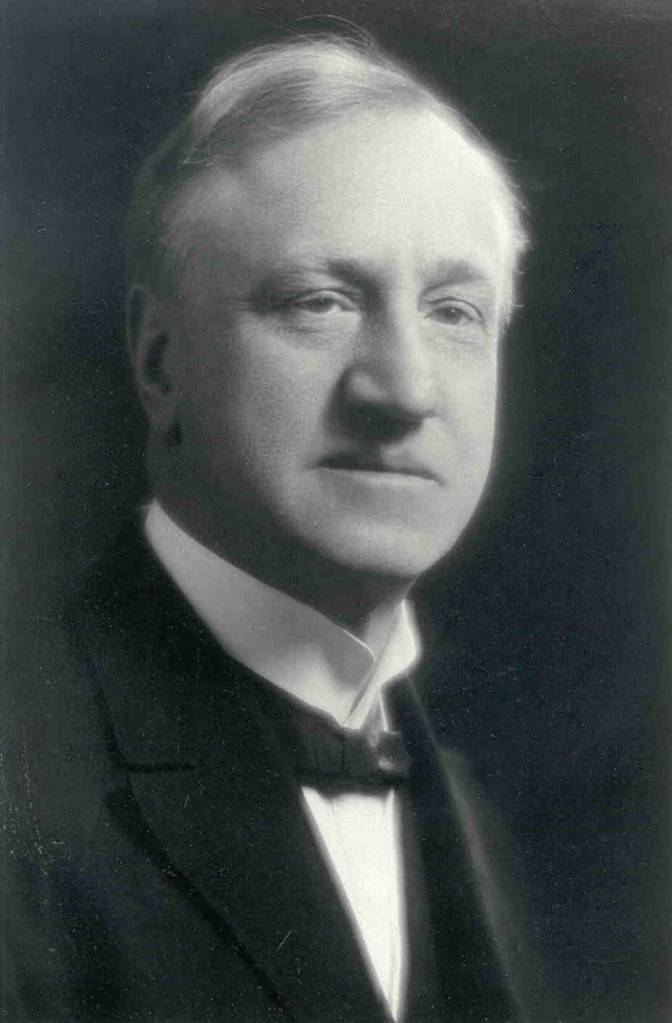
That said, this blog is not about his theological legacy. Instead, it focuses on something all historians should see as a positive about Shields: his desire to keep a record. He was deeply concerned with recording—in detail—his words and opinions. In fact, he was so outspoken that one reporter in the early 1930s remarked that he hoped Shields would never die because “he makes such beautiful copy.”1
Today, various historians still agree that Shields “makes such beautiful copy,” but that is only possible because he kept such detailed records. One never has to wonder where he stood on virtually any issue. His weekly newspaper, The Gospel Witness, for example, has been an indispensable source for countless historical projects.
Yet not only did he care about keeping records, but he also cared about capturing the words precisely. This is not to say that he didn’t put his own “spin” on certain events (indeed, some material in The Gospel Witness comes close to being outright propaganda) or that he was somehow committed to objectivity. Rather, it means that the words that were recorded were done so meticulously. To ensure accuracy, for example, his sermons were always recorded by stenographers.
Not only did he seek to record with precision, but he also prioritized speed. In one example from the early 1920s, Shields became so concerned about accuracy and timing that he hired nine courtroom stenographers and a publishing firm’s night staff to record and publish a speech he was set to give at 8:00pm on Friday night. The speech ran for four hours, ending around midnight, after which time the stenographers sent it to the publishing firm, who had it (all 56 pages) in book form ready for distribution at a conference the following day.2
Of course, it should be noted that Shields’ desire to keep records was not out of some noble dedication to posterity. His records usually functioned as evidence in a trial in the court of public opinion. We may disagree with the integrity of these motivations—and there is much that could be said about his theology or approach to ministry—but the fact remains that he has done historians a favour on many different topics.
Historians are often at the mercy of their sources. We are not mind readers (or maybe I missed that class in grad school?), but with Shields, we don’t have to be. He tells us virtually everything we may want to know—and then some. If more Baptists in Canada kept such detailed records, we would know a lot more about the denomination.
* * *
Taylor Murray, PhD, is Instructor of Christian History and Creative Producer of Distributed Learning at Tyndale University in Toronto. He is the Vice President of the Canadian Baptist Historical Society and Managing Editor of The Bulletin of the Canadian Baptist Historical Society.
Endnotes
- Quoted in Jean Graham, “Among those Present,” Toronto Telegram, July 1930, 107.
- For a good overview of this remarkable episode, see Doug Adams, “War of the Worlds: The Militant Fundamentalism of Dr. Thomas Todhunter Shields and the Paradox of Modernity,” PhD Diss., University of Western Ontario, 2015, 304–305.
**The views of this Blog represent those of the author, and not necessarily the CBHS.**


Leave a Reply